Jack Canon's American Destiny

Showing posts with label Guest Post. Show all posts

Friday, April 18, 2014

Inside the Mind of Michael J. Webb – Michael J. Webb @mjwebbbooks

0 comments

Inside the Mind of Michael J. Webb

Someone once said, “Inside every fat book is a thin book trying to get out . . .”  I can’t help myself–I write “fat” books! I’ve tried to write books under one hundred thousand words, but no matter how hard I try, I just can’t seem to lose the weight.

My very first novel started out at over two hundred thousand words–and became a trilogy. I’ve tried writing short stories and they turn into novellas.  I’ve tried novellas and they turn into full-blown novels. I’m a hopeless lover of deep characterization and back story, lots of action, and page-turning plots, something nearly impossible for me to do in less than one hundred thousand words.

I’m a storyteller at heart, and I love entertaining readers with pulse-pounding action, flawed–but intriguing–characters, and fascinating plots that have my readers asking, “How did he come up with that?”  My tagline is “stories that ignite imaginations and stir souls…”  I like to get people thinking about the world they live in from a very different perspective than they are used to, especially as it relates to the realm of the spirit, angels and demons, and the intersection of the biblical, scientific, and historical disciplines.

There is an ancient battle being fought around us on an hourly basis in the realm of the spirit.  It regularly manifests in the natural, terrestrial realm, yet few people really understand the true nature of the battle. Hence, many perish for lack of knowledge.  Like Toto in the Wizard of Oz, I love pulling back the curtain and exposing “the wizard” for who he is–a short, balding, fat man from Kansas!  That’s not to say the wizard doesn’t have power, he does.  But with the proper weapons of warfare we may lose a few battles, but we ultimately win the war.  I like to think that in some small way my stories have the potential to function like the red pill Nero took in The Matrix—we awaken and discover just how deep the rabbit hole is.   Once that happens, like Nero, we are accountable for our knowledge.

Nevertheless, while all of my suspense thrillers, including Infernal Gates, have the purpose of provoking my readers to examine their belief system, at their core I hope they are simply good stories; the kind that keep you turning pages long after the sun goes down and make you wish there was more to read once you’ve finished.  My heart is to figuratively serve up a ten course meal with each new story I tell, and leave my readers hungry for their next serving.

Don’t get me wrong, there is definitely a place in this world for short stories, novellas, and novels under a hundred thousand words. I just won’t be writing them anytime soon.

Infernal Gates

Ethan Freeman, ex-Special Forces Ranger, wakes up to discover he is the sole survivor of a fiery commercial airline crash that killed his entire family. His nightmare is only beginning when he becomes the FBI’s prime suspect. Only Ethan knows he’s not a cold-hearted murderer, but he has no idea what happened to him--and why he alone survived.

He finds an unlikely ally in Sam Weaver, the NTSB Chief Investigator. An ex-military pilot, Sam senses Ethan is innocent. She tries to remain dispassionate in her investigation of the crash even as she finds herself attracted to the man who may be America=s worst homegrown mass-murderer.

Neither Ethan nor Sam realize that shadowy spiritual forces are at work which will alter their lives forever.

A monstrous evil, imprisoned since the time of the Pharaohs, has been released by The Nine, a sinister group of powerful men and women who believe they are the direct descendants of the Anunnaki, ancient Sumerian gods. The demon they have unleashed intends to free The Destroyer from The Abyss, the angelic prison referred to in the Book of Revelation, and unleash a worldwide reign of terror and annihilation.

Facing impossible odds, time is running out for Ethan and all of humanity as he is drawn into an ever-deeper conspiracy--millennia in the making--and learns that he is the key to stopping The Nine. Will he overcome his deepest fears and find reserves of strength he never knew he had as he confronts pure evil in order to save himself and an unsuspecting world?

Buy Now @ Amazon

Genre – Christian Thriller, Fantasy, Adventure

Rating – PG-13

More details about the author and the book

Connect with Michael J. Webb on Facebook & G+ & Twitter

Website http://www.michaeljwebbfiction.com/

GIVEAWAY

The author is giving away the following prizes -- mailed directly to the winner’s email address from Amazon.com.

PRIZES:

5 Kindle copies of Infernal Gates http://amzn.to/18HrDjY

5 Kindle copies of The Oldest Enemy http://amzn.to/RWyv4c

5 Kindle copies of The Master’s Quilt http://amzn.to/Z2SJQS

Thursday, April 17, 2014

10 Things You Didn’t Know About Becoming a Published Author – Pepper Winters @PepperWinters

0 comments

10 Things You Didn’t Know About Becoming a Published Author

This is a good question and I’ve learned a lot along the way.

Tears of Tess is my debut book and I went into this completely clueless, but now I feel like I know a bit more and would like to share a bit of what I learned.

A 9-5 day isn’t existent when you’re a writer. I never stop thinking about writing, plotting, editing. It’s never ending

  1. Good days and bad days are constant and it’s hard to ride through the ‘’I suck, what am I doing days’’
  2. Start promotion WAY before you’re ready to publish. This is vital to get the word out before your book is published
  3. Drink caffeine. Lots of caffeine.
  4. Get a team of wonderful Beta Readers to help point of plot holes as you’ll want to patch those up before the reviews come in.
  5. Don’t read bad reviews. Ban yourself from Goodreads. I thought I had thick skin, but reading some so-so reviews can tear your heart out.
  6. Make sure your manuscript is in the best possible condition (edited, formatted) before pressing that published button.
  7. Just because you’re published it doesn’t mean you can relax. In fact, I’ve found I work harder now than I did before as I have ‘’fan mail’’ and social media piling up while trying to write.
  8. Write everyday. Even if you don’t want to. If you can’t write on your current story, start another. Just keep writing.
  9. Once you’re published it’s a full time job to keep the buzz and interest about your work. Run giveaways, and interact with your fans.

Hope that helps!

Tears of Tess

Tess Snow has everything she ever wanted: one more semester before a career in property development, a loving boyfriend, and a future dazzling bright with possibility.

For their two year anniversary, Brax surprises Tess with a romantic trip to Mexico. Sandy beaches, delicious cocktails, and soul-connecting sex set the mood for a wonderful holiday. With a full heart, and looking forward to a passion filled week, Tess is on top of the world.

But lusty paradise is shattered.

Kidnapped. Drugged. Stolen. Tess is forced into a world full of darkness and terror.

Captive and alone with no savior, no lover, no faith, no future, Tess evolves from terrified girl to fierce fighter. But no matter her strength, it can’t save her from the horror of being sold.

Can Brax find Tess before she’s broken and ruined, or will Tess’s new owner change her life forever?

Buy Now @ Amazon & Smashwords

Genre – Dark New Adult Contemporary Romance

Rating – PG-18

More details about the author

Connect with Pepper Winters on Facebook & Twitter

Website http://www.pepperwinters.wordpress.com/

Monday, April 14, 2014

“EL PROMO” – Colin Falconer @colin_falconer

0 comments

“EL PROMO”

OR: HOW TO SELL YOUR BOOK IN LATIN AMERICA AND HAVE A BLONDE IN A BLACK BIKINI PIN YOU TO A PSYCHIATRIST’S COUCH ON NATIONAL TELEVISION

Colin Falconer

(Isabella)

Everything you’ve ever heard about Mexico City is true. The city contains roughly the same population as the whole of Australia and twice as many cars as people. One day walking in the streets of El DF is equivalent to smoking a pack of forty cigarettes.

I was there for a week a few years back to promote a book I had written about the conquest of Mexico. My American publishers had not promoted it at all, so I was bemused to arrive and discover it had been a bestseller in Latin America for weeks.

The central figure of my story was a Mayan princess called Malinche, Hernan Cortes’ lover during his ‘entrada’ in the early sixteenth century. My book speculated about her life, her motives, her role in the defeat of the Aztecs and most especially, the precise nature of her relationship with the great conquistador.

Well. You wouldn’t think the Mexicans would care anymore, would you? The woman has been dead for half a millennium and her name is almost unknown outside of Mexico.

clip_image001

But they do care; they care a lot. It was why almost every newspaper and magazine in the city wanted to talk to me.

They care so much, in fact, that at times I was being interviewed by three journalists at a time because there was not enough time to schedule everyone.

Not all of the journalists liked the book; halfway through one interview a journalist threw his manbag at me and stormed out of the office.

I didn’t read the review but I got the impression that I wouldn’t be able to use any quotes on the cover of the reprint.

clip_image002

My interpreter for the duration of my stay was a very attractive young woman by the name of Beatriz, publicity director for the large publishing house that had bought Spanish rights to my book.

When I was invited onto a popular daytime television show she only found out half an hour before my appearance that she would be required to accompany me in front of the TV cameras as my interpreter.

She had never been on television before and was very nervous, especially as the show’s host was the notorious Victor Trujillo, Mexico TV’s shock jock. Her husband was away on business in Guadalajara and she was afraid that he might see the program; she was also nervous that her mother, a very strict Catholic who disapproved of our host, might also hear about it.

Victor’s particular schtick was to have his guests lie down on a psychiatrist’s couch while he sat behind them and asked them personal questions, like a therapist. Sometimes he would have a blonde in a red leather bikini stride onto the set and sit on his guest’s lap to distract them – so really, it was more like a kinky interrogation session than a sombre literary interview.

Fortunately Beatrix had warned me about this.

So when the blonde came on set, I was prepared. When she flirted, I flirted back. Now I had Victor on the back foot.

clip_image003

Disappointed at not catching me off guard, he raised the stakes. He brought on his second surprise – a male model with a six pack (make that twelve) in a bulging g-string who came and sat on Beatriz’s lap.

I don’t know who was more surprised; my blushing interpreter or her husband, watching from his hotel room in Guadalajara.

On the way back to the car afterwards Beatriz was busy fielding phone calls from her mother and her other half. After she hung up the phone she told me she would not be acting for any more Australian authors. I protested that it really wasn’t my fault but she told me I was a no-good gringo and I could get my own lunch. So there.

Wow, this was really working out well.

clip_image004

The next morning I woke at six o’clock to the sound of bugle and drum, as the Mexican flag was raised in the Plaza Major. It is a big flag, a monster that takes a dozen soldiers standing at arm’s length to furl and unfurl.

I spent the morning with more journalists (no man bags thank God) and then Beatrix took me to an early lunch and invited me to sample one of the local delicacies, chilli chicken in chocolate sauce. It tastes exactly like it sounds, like chicken covered in spicy chocolate sauce.

She then drove me back to the television studios for an interview that was to be syndicated throughout Latin America, South America and the US. I was happy enough with this but did not discover until a minute or so before we went on air that it would last for the better part of an hour.

I also discovered that my interviewer, who could speak perfect English, would instead ask me the questions in Spanish, and these would be relayed to me through my earphones by an interpreter – at about a split second delay.

clip_image006

If you’ve never had this experience you do not appreciate how disconcerting this is. You have no idea what to do with your eyes for one thing; if you look at your interviewer’s face, the lip movements are out of synch with what you’re hearing and you end up staring at your interlocutor like an imbecile and going “Huh?”

Or if you look away and just concentrate on what you’re hearing through your earphones you look like someone who’s lived with their bedridden mother all their life and has lost any ability for social interaction.

To compound my panic the chocolate chilli chicken I had eaten for lunch had come back to haunt me. Montezuma had decided to take his revenge on the latest author to slur his name and not only could I not look my interviewer in the face – I also began to sweat, wriggle and cross and uncross my legs every few seconds.

I survived the interview with seconds to spare. Was it Beatrix’s revenge? I suspect so.

All in all, my author tour of Mexico was a chastening experience. Oh, and I got mugged. But hell, it’s Mexico. Doesn’t everyone?

Would I go back and do it all again? If I could get another book on their bestseller; lists, you bet. I’m a writer – it’s okay to be shameless.

But next time I’ll pass on the chilli chocolate chicken.

Isabella

She was taught to obey. Now she has learned to rebel.

12 year old Isabella, a French princess marries the King of England - only to discover he has a terrible secret. Ten long years later she is in utter despair - does she submit to a lifetime of solitude and a spiritual death - or seize her destiny and take the throne of England for herself?

Isabella is just twelve years old when she marries Edward II of England. For the young princess it is love at first sight - but Edward has a terrible secret that threatens to tear their marriage - and England apart.

Who is Piers Gaveston - and why is his presence in the king’s court about to plunge England into civil war?

The young queen believes in the love songs of the troubadours and her own exalted destiny - but she finds reality very different. As she grows to a woman in the deadly maelstrom of Edward’s court, she must decide between her husband, her children, even her life - and one breath-taking gamble that will change the course of history.

This is the story of Isabella, the only woman ever to invade England - and win.

In the tradition of Philippa Gregory and Elizabeth Chadwick, ISABELLA is thoroughly researched and fast paced, the little known story of the one invasion the English never talk about.

Buy Now @ Amazon

Genre – Historical Fiction

Rating – PG-13

More details about the author

Connect with Colin Falconer on Facebook & Twitter

Website https://colinfalconer.wordpress.com/

Friday, December 27, 2013

Julia Park Tracey – A Day in the Life of An Indie Author

1 comments

A Day in the Life of An Indie Author

by Julia Park Tracey

4:30 a.m. Let cats out.

5:00 a.m. Let cats in.

5:30 a.m. Cats have a brawl on top of my legs in bed. Kick both cats off. Husband awakens and gets ready for work. Try to sleep a little longer.

6:00 a.m. Give up on sleep and take meds, feed cats, start coffee.

6:30 a.m. Caffeine intake on target. Ready for blast off. Check email. Check Facebook. Check Twitter. Read online newspaper. Reply to overnight tweets and posts with snappy comebacks. Consider the merits of own wit. Praise self.

8 a.m. Look for email from Big Name Publisher, then laugh because there isn’t one. It is I. I do it all. I remind myself of this when there is no big fat contract to sign or big fat check in the mail. I also remember it when I reap what I sow, that is, work hard and see results.

By 9 a.m. I am setting up my Twitter, Facebook and Google+ feeds for the day via HootSuite. With the Doris Diaries (my women’s history project), I post excerpts from my great-aunts diary from the 1920s on one set of social media. On my author pages, I post relevant links to articles, personal appearances or funny things I saw while reading the newspaper earlier in the day. As an aside, I have a degree in journalism and our professors used to grill us on what was in the paper every morning. I have never lost the habit of reading through the local, national and world news, plus sports, biz and weather – and I find surprisingly relevant-to-my-book articles all the time. For Tongues of Angels, my current novel, I am posting all kinds of links and articles about the new pope, equal rights for gays and women, and other social justice stories.

Somewhere in here I eat a bowl of cereal or yogurt. I also look at the dishes from last night and think about washing them. I don’t. But I do consider it.

By 10 a.m. I am working on marketing and answering email. I might have a blog post to write but I’ll put that off til later. Why? Because every writer procrastinates. I am one of them My addiction to the deadline keeps me working on a story in my head until the last possible minute, and then I sit and dump, that is, I write a powerful first draft, do a quick clean up, and skid into the finish line with a minute to spare, if not a few minutes late. (My journalism background is a blessing and a curse. I write clean copy. I wait til the last minute.)

One of the most important tasks I do is a daily marketing to-do, something that my publishing consortium asks of us. The women at Indie-Visible have set up a plan called “One-A-Days,” that is, a simple marketing task to keep us in the groove. It might be as simple as checking my blog statistics or adding a new hashtag to my Twitter profile. It might mean looking for search terms to add to my web site. It might mean I review another author’s book or vote on a GoodReads Listopia list. One simple task that pushes the book even an inch further on its jurney out into the world is all we ask. (This One-A-Day is now available free to subscribers at this link.

11 a.m. is a good time for another cup of coffee (two a day is my usual dosage) and a quick peek at Facebook and Twitter via HootSuite or the actual sites. It’s good to check in and see how people are responding to your posts, and to comment and RT other things you see online. It’s the back-and-forth that builds followers, and the Lord knows, I need followers. Popping in *briefly* is also a way to curate your social media. Stop any bickering, delete any stalkers, answer any questions, update a question or event you left hanging there. But I don’t let it become a time suck.

As an indie author, I also have a lot of other work to do. Pay the rent and the bills, for one thing. Housework and cooking, for another. About midmorning, I throw in a load of laundry, decide what’s for dinner and look at my bills. If I have some of those things to do, I either do morning or afternoon, but try to compress it to one day a week, morning or afternoon. I don’t like to lose too much time dithering away at the grocery store.

I’m also a freelancer, which pays the bills between royalty checks. I might have an article to write, an interview to set up, or a meeting over coffee with a potential client. I might write a company history, edit someone’s manuscript, or prepare an outline for a class I will teach in the fall. Note: Your local adult school, par and rec department or senior center is always looking for someone to teach a one-night or several-weeks-long course. Creative writing? Poetry boot camp? Children’s journaling and storytelling? If it’s something you can teach, write up a proposal and send it in. The worst that can happen is they say no. And if they say yes, another income stream. This fall I will be teaching a children’s journalism program at various elementary schools, and I have an outline in hand for that. I have met with the director of the program three times so far this spring, and those are meetings I set up for late morning (in time for that tasty second cup of coffee) or late afternoon (time for tea!).

In the meantime, aside from domestic duties and outside appointments, I have editing or writing to do. And by midmorning, I need to be head-down and humming.

I usually don’t eat lunch at noon. I usually look at my clock and realize it’s about 1:30 and time to eat.

1:30 p.m. Break for lunch. A good time for reading.

2 p.m. If I have anything to mail, and missed the post, this is a good time to take a break and walk to the PO. It’s important to get away from the desk, stretch out the legs and arms and stop being the Hunchback of Julia’s Apartment. I have a tendency toward repetitive stress injuries (shoulder, tendons, wrists) so I force myself to get away from the desk every day. Vitamin D is also important (sunshine).

3 p.m. When I get back from my walk and errands, I often settle down with a book or manuscript to read. I might make comments on a work in progress (either a paid gig or for a writer friend), or I might be reviewing a book for a blog, web site or newspaper. Afternoon reading time is important for me. Of course, sometimes I get sleepy, but giving myself down time in the midafternoon is crucial. Because I work at home, I often work until late at night. Down time to read for pleasure also takes place here. And if I didn’t go to the post office or run errands, I might read all afternoon and walk at sunset instead.

Somewhere between 4 p.m. and 5 p.m. I make myself a cup of tea. Add a few cookies or a piece of toast to that, to keep my going until dinner time. I head back to the laptop and check in on email, social media and news of the world while enjoying my tea.

6 p.m. is a tough time to get any work done. The Boy (he’s 15) is usually home and getting ready for kick boxing class or other evening activity. Mr. Husband gets home. I need to get dinner going. So I stop working for a while and take care of folding laundry or other chores while dinner cooks. This is usually when last night’s dishes get done.

7:30 p.m. is time for dinner. It’s the only time we are in the same place at the same time, and one of our four daughters might swing by. Dishes get stacked after dinner and await my tender ministrations in the morning. Or whenever.

About 8 p.m. I go back to my computer. I usually have a last burst of energy here and get in another one to three hours, depending on how annoying the cats were the previous night. If I have a deadline, I am definitely going to be working til 10 p.m. That’s about as late as I push it, generally, but there are days when I’m still working at midnight. Deadlines – ha ha! I laugh at them! They don’t laugh back.

But on a good day, I am in bed somewhere between 9:30 and 10 p.m., reading some more. Good readers make good writers, and I read voraciously. I get in half an hour at least at night, but if it’s riveting, I might be up til 11 p.m. or later.

That snoring sound is my husband, in bed and sawing logs since about 8:30 p.m. I also can hear my downstairs neighbor snoring. Earplugs in, lights out. No worries – the cats will wake me when it’s time to go out.

Julia Park Tracey is an award-winning journalist and blogger. Her novel, Tongues of Angels, is live at Amazon and your local bookstore now. Like her at Facebook/JuliaParkTracey or on Twitter@JuliaParkTracey.

Tongues of Angels

Buy Now @ Amazon

Genre - Contemporary Romance

Rating – PG13

More details about the author & the book

Connect with Julia Park Tracey on Facebook & Twitter

Blog http://www.thedorisdiaries.com/

Monday, December 9, 2013

J.L. Myers – My Publishing Journey @BloodBoundJLM

0 comments

My Publishing Journey

When I started writing What Lies Inside, I had always intended to follow the path of traditional publishing. Honestly I had no idea of knowledge of how self-publishing even operated or how I would go about it. So I kept writing and completed my novel. Once it was finished I tried to revise it myself, with no educational knowledge of how to do so. After that I tried my luck and sent out a few queries and sample chapters to agents in my genre. The waiting was torture and of the few I’d sent to and received replies from, although they were encouraging, none of them were interested in taking me on.

During the waiting time (because I’m the least patient person you’ll every meet) I began doing research, wondering if my lack of experience was holding me back. That was when I came across Holly Lisle’s writing and revising courses. Having already written the entire novel her ‘How To Revise Your Novel’ course was absolutely prefect. The taught revision of my novel began that day for a course that delivered an in-depth lesson every week for around 5 months. This course along with Holly’s involvement and honesty changed my life. It gave me the tools to be able to turn what I had originally created into a finished and polished book that I was proud to have created and was confident in sharing.

Holly’s course also opened my eyes to the possibility of self-publishing. Holly herself was a traditionally published author for many years and has now taken the self-publishing route by choice. Knowing both sides she provides personal experience and the pros and cons of each option.

From everything I learned, I decided to take my future into my own hands instead of waiting hopefully for an agent or publisher to taken me on. This was also      the right decision for the Blood Bound Series as I didn’t want to get represented, then have and editor demand I remove the main things that made me write this story in the first place, or decide that my intended series needed to end into two books or even one.

After the decision was made and Holly’s course was completed it was time to source an editor, proofreader, get the cover professionally made, have the eBook formatted, the website created…and finally create an account on Amazon to publish my book. Being self-published all of these things are now in the author’s hands, and while you can hire people to help, which I did and recommend if you can afford it, the processes are still long and require a lot of input and attention for you. All the time, sweat and tears involved, I’m glad I self-published and having now done it I definitely wouldn’t change a thing.

What Lies Inside

Amelia Lamont never asked to unleash her inner vampire

Amelia’s normal teen world is shattered when a terrifying nightmare awakens the monster inside her. A newfound, insatiable thirst for blood that leads her to drain the school quarterback is only the beginning; she’s horrified to discover that her family and best friend Kendrick have been harboring the secret all along. And is the strangely alluring boy who seems hell-bent on curbing her murderous, blood-filled desires a friend, or foe?

To escape detection Amelia and her twin brother Dorian are forced to move to a new town, and the challenge of a new, exclusive high school where nearly every classmate smells like prey. Including the irresistible Ty, who seems hauntingly familiar, yet darkly menacing …

Amelia’s disturbing dreams and entanglement in a web of forbidden romance render her increasingly powerless against the chilling lies and secrets of vampire power struggles. And, as she soon discovers, vampire politics mixed with outlawed love can be a lethal cocktail.

Falling in love may just cost Amelia everything: her friends, her family…even her life

Move over Twilight, True Blood and Underworld! J.L. Myers’ first book in the Blood Bound series will have you swooning for more!

Warning – This book contains some language and sexual situations.

YA/ Vampire/ Paranormal Fiction

Buy Now @ Amazon

Genre – YA Paranormal Romance

Rating – PG-13+

More details about the author

Connect with  Jessica Myers on Facebook & Twitter

Website http://bloodboundnovels.com

Quality Reads UK Book Club Disclosure: Author interview / guest post has been submitted by the author and previously used on other sites.

Saturday, November 16, 2013

Stephanie Erickson – Why Book Covers Are So Important

0 comments

Why Book Covers are so Important

by Stephanie Erickson

As a graphic designer, this issue strikes a cord with me.  I’ve spent years learning how your eye tracks across the page, what is visually appealing, and how to attract millions with something as simple as an apple with a chunk taken out of it.

With writing, you might think your work is done once you’ve written something brilliant.  You’re going to be the next Steven King meets F. Scott Fitzgerald right?  Obviously you’re that perfect balance of appeal to the masses meets substance, and people should read it just based on that.  No need to flower it up with distracting, flashy designs and covers right?  Wrong.

Take your reader on a date

Think about it like this:  Your cover is your first impression, your first date with your potential reader.  If you want this person to spend the rest of their life with you (as loyal readers do), do you show up smelling like you haven’t showered in a week, covered in dust and dirt, and wearing last week’s dirty clothes?  No, you’ll dress up, put on your best cologne, and maybe even use one of those teeth whitening systems.  The same applies to your book.

I’ve found with the Indie publishing industry, book covers tend to be an after thought.  Indie authors have already spent their money on editors, so there’s not much left to hire a designer for the cover.  They figure they can do it themselves in Microsoft Paint and call it a day.  Nine times out of ten, they’re killing their book before it ever hits Amazon.

It’s important to invest in that first date.  Spend the money on the tooth whitening system, so your reader isn’t disgusted by you.  Get a new dress to really get them salivating over you.  In the end, it’ll pay dividends.

It’s very shiny, very sparkly

As a general rule, people are visual.  The problem is, people are also unique.  What one person finds attractive, someone else may be repulsed by.  The key is finding a balance, and when it comes to your book, it can mean the difference between 50 sales and 50,000 sales.

As a professional designer, I’m always going to recommend hiring someone to do your cover.  However, if you insist on doing your own, here are a few tips:

  1. Look at other books in your genre that made the bestseller list.  Not the Amazon>Kindle Store>Kindle eBooks> Literature & Fiction>Genre Fiction>Romance>Paranormal list.  The actual New York Times bestseller list.  You know, the ones with George R. R. Martin, Barbra Kingsolver, James Patterson and the like.  No, you probably won’t go shoulder to shoulder with them from your first book, but there’s a reason why they’re so successful.  What attracts you to their books?  Is it the color scheme?  The art? The font?  Try to mimic that.
  2. Pay for actual art.  Nothing turns a reader off faster than a low resolution image you shanghai’d off the internet.  I know, the point of doing it yourself was so you didn’t have to spend money, but don’t shoot yourself in the foot here.  Additionally, paying for art helps protect you from all those pesky internet theft rules.
  3. Capture your title.  Above all, create a captivating image that encapsulates what your story is about.  The Blackout is about a catastrophic solar flare.  So naturally, the cover has a dramatic solar flare striking the title on it. Is your book a romance?  Typically those have pictures of couples, but don’t feel constrained either.  You could use a foggy picture of rolling hills (think Wuthering Heights).  The point is to be relevant to your content, but still stand out in an appealing way.  Sound complicated?  It is.  That’s why there are people who make careers of it.
  4. Above all, come up with a design that would make you want to read the book if you hadn’t written it.  Think your cover is boring and amateur?  You better believe your potential readers will too.

Buy Now @ Amazon

Genre – Adult Fiction / Contemporary

Rating – PG13 (some strong language)

More details about the author & the book

Connect with Stephanie Erickson on Facebook & Twitter

Website http://stephanieerickson.weebly.com/

Thursday, October 10, 2013

George Bernstein – On Doing Research

0 comments

On Doing Research

by George Bernstein

Non-fiction writers are constantly challenged with getting the facts right. That usually requires a lot of research, especially if you’re dealing with a subject on which you are not already an expert. Nothing denigrates a work more than faulty or bogus data.

Of course, if you’re writing fiction, your imagination is allowed to run free, so accurate details aren’t prerequisites, right?

Wrong! Nothing bugs readers more than seeing information that is totally out of sync with the real world… unless you are writing fantasy or sci-fi. Even little things like descriptions of locations that don’t jive with physical reality can draw critical comments on a writer’s web site or the multitude of writing blogs that span the internet. Of course, you can intentionally change the description of a location and give streets bogus names if you think it necessary for the story you’ve developed. Just be sure you state that fact in the Foreword or Acknowledgements.

Occasionally you’ll find your imagination actually coincides with reality. That’s when getting the facts straight really count. When I began writing my first novel, Trapped, in 1990, I imagined a physical condition for my protagonist, Jackee, as physically comatose but fully sentient, locked in her head. Only her mind and her eyes worked. It wasn’t until several years ago that I heard of “Locked-in Syndrome,” which is exactly the condition I envisioned. When Trapped won TAG Publisher’s  “Next Great American Novel” contest in 2012, and I was on my way to getting published, I figured I‘d better do some research on the condition, to lend reality to her story.

Thanks to Google, I found a plethora of articles on the syndrome, including many vignettes about real people in Locked-in Syndrome. I even discovered the medical terms for the parts of the brain affected. It took several days of digging and sorting to accumulate what I needed, and then several more days to incorporate it into the story without making it look like a “data dump.” I was happy with the results, and I’ve received many comments from doctors, including two neurologists, complimenting me on the accuracy of my work. That makes you feel great about a job well done.

In my second novel, A 3rd Time to Die, launched in June of 2013, I was faced with a more difficult research task. This romantic suspense deals with past lives and rebirth. I’d read several books on the subject by Dr. Brian Weiss, a leading proponent of the subject. In A 3rd Time to Die, two lovers are brutally murdered in the 17th Century. Their souls are reborn in the 19th Cerntury, again finding love together… and are again gruesomely murdered. Now they are back in the 21st Century… and so is their killer.

My protagonist is eventually hypnotically regressed into those past lives, so I decided reading about how it was done wasn’t going to cut it for me. I found an associate of Dr. Weiss’ who hypnotically regressed me… into NINE lives of my own. I had my doubts of the reality of the condition, but wanted to see what it was like. This, you may think, is going a bit “overboard” for research, but it was a life-changing experience. I’ve found that good research is often fulfilling and mentally expanding, but this went beyond. And it gave me a clear understanding of how regression actually works, the actual mechanics the therapist uses to take you back… back… back into past lives.

Here’s an interesting personal antidote. When I was twelve, my dad brought home a bow and a big straw bull’s-eye target. My only experience with a bow was Western movies, but I set up the target in the back yard, strung the bow (how did I even know how to do that?), paced off about 100 feet…and started shooting bull’s-eyes! I seldom missed that center black circle. Once, while practicing, a big crow flew over, probably 60 feet high. I instinctively put an arrow in him. A week later, while “hunting” in a nearby forest preserve, I flushed a ringneck pheasant, and knocked him down with a quick shot. Then a rabbit, dodging through the brush. I don’t know how I did it, I just DID IT, without thinking.

The point of this little tale is, during one of my regressions, I found myself in Lincolnshire Forest, shooting game for a 16th Century English duke… a regular Robin Hood. An interesting and provocative side-light to doing research for a novel.

Frankly, I’m usually reluctant to do much research. It can be time consuming, and often frustrating. I’d rather rely on my imagination. But, if you’re a serious writer, the time will come when it’s a necessity to lend the feeling of reality to your tale. I’ve written two novels in a series featuring a troubled Miami homicide detective. In the first, he’s chasing an elusive serial killer. Now we all know quite a bit about these guys, with all the TV detective shows, but I needed to know more details of who they are, how they think, and what can motivate them. Again, plunging into Google, I found loads of information, including the complete minutes of an FBI symposium given by their BAU division (Think “Criminal Minds” on TV). While those two novels are yet to be published, I’ve now got a storehouse of info on how to make these guys seem real.

Research can be complex, like regressing into Past Lives, or simple, like learning about the streets and demographics of a city you’re writing about but have not visited. Whatever, good research helps separate the professional novelist from the common amateur.

Sometimes, it can be down-right fun! Just don’t forget the “Disclaimer” in the front matter of your book, stating this is a work of fiction, and you may have taken liberty with facts to meet the demands of the story.


3rdTime3D-2

Ashley Easton rescues a badly abused horse, deciding to return to show jumping, the passion of her youth. The animal gives unquestioned love, something lacking from her husband, Keith. But when Ashley begins to compete, she is terrified as the show course seemingly changes into an old forest and the jumps appear as real walls, fences and trees. Her thoughts spill through her head in elegant French. As she attacks the fences with an unfamiliar, fearless abandon, she begins winning every competition.

Craig Thornton, an avid horseman, happens upon Ashley’s first competition, entranced as he watches her jump her horse, Injun. Mystically drawn toward each other, it’s as if they knew the other…but from where? After several missed opportunities, they finally meet, becoming fast friends, their love of jumping horses a mutual bond.

Ashley seeks therapy to address a strange terror swamping her whenever she’s intimate. During hypnotic regression, she’s stunned to find herself in two apparent past lives, first in the 17th Century, on a fox hunt as the fearless French horsewoman who fills her head while jumping, and again, 150 years later in Philadelphia, a shipping tycoons daughter. Both times she is fulfilled by glorious romance, followed by the terror of their brutal murder while making fervid love in a forested glade!

The doctor says these are figments of her subconscious, but he’s shaken, knowing the truth. He realizes those were real past lives, and their killer may be lurking again, nearby.

Ashley and Craig soon discover more than friendship. As these two newly rediscovered lovers struggle to free themselves from broken marriages, others plan to fulfill a 300 year-old legacy of death.

Buy Now @ Amazon

Genre – Romantic Suspense

Rating – PG13

More details about the author

Connect with George Bernstein on Facebook & Twitter

Wednesday, September 25, 2013

What Inspired Me to Write My Book by Mike Hartner

0 comments
In the beginning, there was light... Ok, maybe that’s going back a bit too far.  Seriously, I was writing books about my family’s history, and the adventures of some of my fore-fathers, when I came across one relative in particular that was pretty inspiring.   He had had a full life.  He’d done things with the military, and even more after coming out of the military.  I obtained his service records, and found even more interesting material.  He was, is, a true hero.  Now, there are reasons why I couldn’t write his story, exactly, with his name.   Sensitivities, and security, being what they are.   So, I decided to try and use him for a character in one of my stories under an assumed name.  And give him a ‘Higgins’-esque role (think back on the Magnum,PI series).  That novel was supposed to take place in current day.  Its four main characters were born in the 50s, and the setting was the 1970s.  Higgins at that point would have been mid-50s.

But, the book never quite was able to be perfect.  I’m not saying perfection perfect.  I’m saying good enough to be proud of and publish perfect.  After two years of banging my head against the proverbial wall with edits and scene changes, etc... my editor finally threw up his hands.  He told me that while he didn’t mind too much continuing down the path we were on, that it was a waste of my time and money, and that I should divert my attentions elsewhere for awhile, and return to this manuscript later.  He asked me to research and write one aspect of the story as far back as I could find information on it.

That expose took me about 2 days.  It had two particular characters in it, and both were men in the late 1500s England.  He looked at it and asked me to write the character story for one of the individuals in the short story.  I looked them over again, and decided that while one of those characters was Geoff - Walter’s father - neither of them warranted a full book.   But when I looked more closely at Geoff, I found Walter.  And Walter did warrant a full book.  So, I listened to Walter Crofter as he poured out his auto-biography.  I listened and transcribed as he told of his adventures and his heartaches.  And then I sent it to my editor.   Walter’s autobiography became I, Walter.

I Walter
Buy Now @ Amazon
Genre – Historical Fiction/ Romance
Rating – PG
More details about the author & the book
Connect with Mike Hartner on Facebook & Twitter

Friday, September 13, 2013

SD O’Donell – Five Tips for Developing Character in Thrillers

0 comments

Five Tips for Developing Character in Thrillers

by SD O’Donnell

No matter how well written, background narrative stops a story’s momentum. For a slower paced story, that isn’t fatal. For a fast-paced thriller, too much can cause a reader to shut the book and never open it again.

It isn’t that mystery/thriller readers don’t care about character development. In fact, the better they know a character, the more they care about what happens to them. That adds tension and suspense. But too often that under-the-skin, behind-the-curtains information ends up being disclosed through a lengthy mental core dump. A person talks to a therapist or friend. Or reveals details through inner dialogue.

The challenge for mystery and thriller writers is to share the depth of their characters while keeping those pages turning. Here are five lessons I’ve learned about describing character while also advancing the story:

  1. Restrict backstory to what is needed at the time.Do you have a spot in your story with four paragraphs of backstory? Ask yourself how much is really essential at that point. Be honest. Maybe it’s important later. If so, put it in later, when it’s really needed. By supplying your backstory in short, pertinent bursts, you don’t stop the story flow.
  1. Trust the reader to infer, read between the lines.This was probably the hardest for me. I’m passionate about my characters and I want to make certain the reader knows and loves them (or hates them) as well as I do. So, I need to share, right? Not always. Readers will draw their own conclusions, based on their own experiences, if you let them. And the best part of letting them? They feel closer to the character because they’ve invested in them.
  2. Give them the salient point and leave it at that.At one spot in Deadly Memories, I turned a full page of background description about why my main character stopped working as detective into one sentence: “It amazed him how easy it was to give up the job when the time came.” I originally gave all the details as to why he thought it would be hard and why it turned out not to be. Do the readers need to know those details? Not really. The personal connection that I want them to feel about his quitting depends more on how much they’ve connected to him so far in the storytelling than the cut-and-dried specifics.
  3. Whenever possible, skip the conversational recap and write the scene.This might seem counter-intuitive. I’m advising you to turn one page of narrative into a three page scene for the purpose of keeping the story flowing? Yes. The difference is, when you’re telling the story, the reader is involved. When you’re writing description, they’re waiting to get back to the story. Three pages can be better than one, if the three pages fully engages the reader.
  1. Analyze the purpose of each chapter and scene. Then combine them when possible.Each scene and chapter should have a reason, a purpose that furthers the story or imparts information the reader needs. Take a close look at that purpose. Does it really need a full scene or chapter to get across? Maybe some of those purposes can be achieved together. If so, suddenly 25 pages can become only 15, without really giving up anything. How? Because 10 of those pages were spent in setting and action that only served the purpose of achieving your objective. With only one setting and group of actions, the same information is shared with less. That keeps those pages turning.  Yes, it hurts to take out material, especially if you’ve written it well. Most of us can rationalize keeping anything we’re attached to. But for the sake of your audience, if you’re writing a mystery or thriller, you need to stay focused on the goal: Keep the action moving forward and that keeps the pages turning.

Buy Now @ Amazon

Genre – Murder / Thriller

Rating – PG13 (some foul language, a few short love scenes)

More details about the author & the book

Connect with S.D. O’Donnell on Facebook & GoodReads

Sunday, September 1, 2013

Vadim Babenko – Stories Behind My Books: Spanish Jail

0 comments

Vadim Babenko – Stories behind my books: Spanish Jail

by Vadim Babenko

I met a girl – the year my life reached an impasse. I rushed about and felt only despair, a total lack of strength. The concept of SEMMANT had been elaborated to the smallest details, but I couldn’t write a single line.

And here I met a girl – I saw her first in a photo. Then we skied in the Alps together. Later we became lovers, and I decided she had not come into my life by happenstance. I told myself: Now, she’s a source of inspiration, a long-awaited sign. I compelled myself to believe this – almost by force – just because it was high time.

I began to write without giving in to any indulgences. The further the book moved ahead, the closer the girl and I got – I even moved to her country, and we started living together. Her presence in the novel was not significant; it was almost imperceptible, except for some details. But her presence in my life was necessary for the novel to be born. And, in turn, the book that was created, its authenticity, its scale, were necessary for our love story to continue, for our relationship to grow stronger.

At some point it became uncomfortable for me. The book and our life together began to depend too much on each other. They fed on mutual energy, and it wasn’t clear where this energy originated. After all, no one had repealed the physical laws of preservation, and I knew their rigor well.

This was the energy of love, my girlfriend told me, and I believed her – having no other theories. And then an event occurred that again turned my life upside down. I was slandered by my former family – out of jealousy and greed, and a desire for revenge. The Spanish authorities brought a criminal case against me. Suspecting nothing, I flew to Madrid to collect my things; they arrested me as I got off the plane. The next several days I spent in a Spanish jail.

This was a new – and utterly negative – experience. I learned that the monstrous state machine could roll over you and crush you even if you were absolutely innocent. Against it you can do nothing – only grit your teeth and endure it until they give you a chance to somehow justify yourself. It took a year and a half for me to completely clear my name. The opposing party was persistent, inventive, and did not want to relent. Nevertheless, I won – after spending an unbelievable amount of money, time, and energy.

However: in that same year and a half I finished my novel! Furthermore, its plot, its whole conceit grew deeper and better structured. And, in addition, the book and the story with the girl became independent from each other right after prison. They had lost their internal link and parted on different trajectories. I no longer felt that one was pledged to the other, and vice versa.

The trajectories, incidentally, were successful. We married, and the book turned out just as it had been conceived. The robot named SEMMANT came to life.

Buy Now @ Amazon & Amazon UK

Genre – Literary Fiction

Rating – NC17

More details about the author & the book

Connect with Vadim Babenko on GoodReads

Website http://www.vadimbabenko.com/

Wednesday, August 21, 2013

Brian Francis Heffron – How to Meet Deadlines & Remain Sane

0 comments

How to Meet Deadlines and Remain Sane

by Brian Francis Heffron

Keep a pad and every time you get a new task write it down on this pad starting with a little circle. Then, when you have accomplished that particular task you put an X through the circle. Sounds simple but putting that X in that circle somehow makes me feel good about accomplishing the task, no matter what it is/was. So I just go down that pad every day and try to knock off a few of those tasks. It turns out that by the end of the week I have actually gotten a lot done!

With refreshing depth, distinct literary merit, and highly original poetic phrasings that spill from the pages like paint, Colorado Mandala is poet Brian Heffron’s debut work of literary fiction. It mines the complex landscape of post-Vietnam America to unearth the deep connections that bind individuals together, and also ferociously rip them asunder. Illustrative, luscious, seductive, and engaging, this rare piece of craftsmanship will stir the senses of any one who thirsts for artistic expression, or who longs for an era in our country now utterly, irretrievably gone.

In the heady, hippie backdrop of Pike’s Peak, Colorado, in the tumultuous 1970s, three souls swirl together in an explosive supernova. Michael is the flinty-eyed, volatile former Green Beret, whose tour in Vietnam has left unbridgeable chasms in his psyche and secrets that can never find light. Sarah is his fair-haired paramour, the ethereal Earth Mother widow of a fallen soldier and single mother to a ten-year-old son Stuart. Paul is a young wanderer, who is drawn in by Michael and soon bears the mantle of both minister and scourge. As they are drawn together, and torn apart, each is changed forever. And our hearts race along with them, through the rocky, raw Colorado terrain amidst the blood sport of man and beast.

Laying bare the loss and acceptance of a pioneering age, Colorado Mandala shines revelatory light on the crazy, glorious, and romantic notion that each generation conceives anew: that love can be a spiritual gift shared openly rather than coveted, or hidden, or hoarded. If you wish to go barefoot again and climb an unspoiled Colorado trail, look no further. If you long for something to wake you up in simple, clean language, a shimmering story awaits. Awaken to what you have always known: simple truths show you the way home. With his gripping and unforgettable Colorado Mandala, it is clear that Brian Heffron knows the way.

Buy Now @ Amazon

Genre – Literary Fiction

Rating – PG

More details about the author

Connect with Brian Heffron on Facebook & Twitter

Website http://www.brianheffron.net/brianheffron.net/Welcome.html

Thursday, August 8, 2013

BE Jewell – 8 Things I Wish I Knew

0 comments

8 Things I Wish I Knew About Being a Self-Published Author Before I Published on Amazon

by B.E. Jewell

When I took the plunge and became a self-published author, I thought to myself “How hard can this be?” I quickly found out being a self-published author can quickly become a full-time job, even if the pay isn’t quite there yet. The Hunter’s Son is live on Amazon (http://amzn.to/YawdEr) and I’m pretty happy with the finished product. These are eight things I learned right away that I wish I knew before I started:

  1. Writing is Lots and Lots of Work- Being an author, whether self or traditionally published is a ton of work. Writing can become an afterthought if you are not careful. Blogging, tweeting, website maintenance, and general promotion can take up all your time. Be prepared to work hard, but in the end, it will pay off.
  2. Please don’t make me read it again- I believe I have written a really fine novel and some solid short stories. However, there is a certain point where I simply cannot read them another time. During the novel writing process I think I read my entire manuscript at least fifteen times. I could quote passages word for word and began to get glassy eyed when I saw it on my screen. The thing that helped the most was taking long breaks from working on my novel during the revision process. This might mean a few days or a few weeks. Each time I came back I felt refreshed and found new things to enjoy about my writing.
  3. Sometimes I have no clue how to use commas- Revisions are one of the most critical part of writing and probably the most boring part, particularly the edits after the final proof read. Professional editing services are a must and I have a great editor (shameless plug for http://bee-editing.com/) but spending hours on end placing punctuation can get old. My advice would be to pay close attention during your second draft process and don’t be afraid to read some things to brush up on grammar. There are plenty of great resources online you can look at (you can even use my errors from the post to help you out!).
  4. People aren’t just going to buy my book because I think it is great- I never knew how much work promotion would be for my book. It is easy to think that you can put a book on Amazon or Smashwords and people will just buy it. At first this may happen when your friends and family snatch up the book right away, but those sales will dry up quickly. My biggest regret is not starting promotion before my book was finished. Don’t make the same mistake I did.
  5. Everyone has a question for me- I never thought I would have to talk about my book so much. At first, I thought I was bugging people by talking about it so much, then I realized I was talking about it because everyone I ran into wanted to ask a question about it. Be prepared to answer “When did you write a book?” more than fifty times in the first month. At some point, this questions is going to be really cool and at some point this questions will get annoying. Just remember that most people are really proud to know an author because so many of them can’t imagine writing a whole book.
  6. Everyone judges a book by its cover- Go to any online bookstore and imagine seeing a book with a terrible cover. Do you think the book contained within that cover is good? Do you think the person put a lot of time and effort into their writing? I was guilty of cheaping out on my cover when I first launched. I took my rudimentary skills in Adobe InDesign and thought my cover looked pretty sweet, until a few days passed and I started to hate what I had done to my good friend’s picture. Needless to say, a few dollars and a nice lady named Cheryl at http://www.ccrbookcoverdesign.com/ made me feel much better about my book. Unless you are a graphic designer, pay for a book cover. You will make your money back for the cover at some point, and, if you don’t, at least you don’t have to be embarrassed when you show your book to friends.
  7. Self-published authors are the nicest people- Think the self-publishing word is scary? I used to until I met some pretty cool people who are doing alright for themselves in the self-publishing world. Everyone is more than willing to share their experiences and tips on how to sell books. The best part is, most of them don’t even charge for it. Since I published my book, I have been in touch with people from all over the world. Each and every one of them is more than happy to help. Don’t be afraid to ask for help or to contact someone who has a good book. Twitter is a great place to do this. In fact, you can follow me @jewellbe. I would love to talk books, sports or anything you want.
  8. I never knew I would smile so much over something I created- I felt proud when I finished my first novel. I know how proud my wife and parents were of me when I told them it was done, but what really stuck a smile on my face was seeing the finished product online. I have a book and it is for sale. I have sold books in the US, Japan, Germany, England and France. People in other countries thought my idea was good enough that they would spend money on it. That is a pretty great feeling. One I plan to have more and more in the future.

There are plenty of other things I have learned since I published my novel, The Hunter’s Son (which incidentally is available on Amazon http://amzn.to/YawdEr). Check it out if you are interested and let me know what you think. If you want to chat some more, reach me @jewellbe on Twitter or check out my blog (jewellbe.blogspot.com). Thanks for reading and best of luck in your pursuit of self-publishing glory.

Buy Now @ Amazon

Genre – YA Supernatural Thriller

Rating – PG13

More details about the author & the book

Connect with BE Jewell on Twitter

Website http://www.jewellbe.com/

Blog http://jewellbe.blogspot.com/

Tuesday, July 23, 2013

Elvis Deane – Finding Your Voice

0 comments


Finding Your Voice: Writing in Third Person

by Elvis Deane 

When you start a new story, one of the very first decisions you have to make is from whose perspective you are telling it.  Sometimes the choice is obvious.  If you’re telling an entire tale from one person’s point-of-view, a first person narrative voice can be an easy choice. However if you’re telling a large story, the ability to step in and out of a character’s perspective is helpful, and in my view, a third person voice lends itself to those types of stories.

When I began writing Pistachio the Tyrant, I was working in animation and hoping to one day write animated feature films.  Because the goal of Pistachio the Tyrant was to write something that lent itself to becoming an epic animated film, the third person omniscient narrative voice lent itself well to the story.  Third person gives us a little distance from the characters we are following, much in the way we might watch them on screen.

There is something to be said about writing in first person.  I’ve written a few short stories from that point-of-view, and I’ve always found it to be very liberating and a speedy way to write, perhaps because it frees you from wanting to describe scenery and the world at large.  If third person can be compared to watching a movie scene with a central characters, first person narrative has more in common with acting.  It allows the author to become the character.  By doing so, you are placing the reader in the character’s shoes and letting them feel the emotion of the situation directly.  Third person tends to be a little colder, a step removed from being the person from whose perspective we are watching the story unfold.  Switching from character to character within a first-person viewpoint can also be jarring, because the “I” from one chapter is not the “I” in the next chapter, and it takes the audience a few sentences to reacquaint themselves with who is now telling the story.

A major reason that I wrote Pistachio the Tyrant from a third person omniscient viewpoint was that I wanted to give a voice to the villains.  It’s easy to look at a character’s actions that are harmful to the protagonist and see them as evil.  If we can sympathize with the villains, understand why they are doing the things they are doing by seeing the world from their point-of-view, then we’re forced to question ourselves a little more, and sympathize a little with why they are doing the terrible things they are doing.

In Pistachio, writing in third person omniscient view let me have Vamen question his own decisions, wrestle with the course of actions he was taking.   His internal conflict is so central to the story that had I only told the story from Pistachio’s point-of-view, many of the twists in the plot would simply not have worked.  Because I was introducing the reader to a whole new world, being able to move from character to character and in different parts of the world lent itself to giving the story an epic feel.

Pistachio the Tyrant

Buy Now @ Amazon @ Smashwords

Genre - Children’s Fantasy

Rating – PG

More details about the author

Connect with Elvis Deane on Facebook & Twitter

Website http://impossibilia.com/

Friday, July 12, 2013

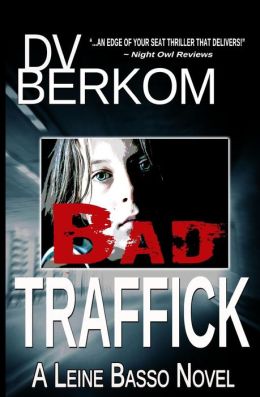
DV Berkom – What Inspired Me to Write Bad Traffick

0 comments

What Inspired Me to Write Bad Traffick

by DV Berkom

Bad Traffick deals with the pervasive issue of child sex-trafficking in the United States. It’s not something that only happens “somewhere else” – children are forced into the sex trade every day, from California to Iowa to Alaska.

I’ve been aware of human trafficking issues for some time and have read dozens of articles pertaining to the exploitation and trafficking of migrant and domestic workers, as well as women and children being sold into sex slavery. My interest deepened after watching a documentary on child sex trafficking in the U.S. shown at a local community college. The statistics floored me.

The socio-economic factors alone are staggering. Worldwide, human trafficking earns over 32 BILLION annually for the criminals and organizations associated with it, second only to the illegal drug trade. Over 20 million women and children have been trafficked (these numbers are deemed to be conservative, considering the underreporting that goes on) with 80% having been sold into sex slavery. A full 50% of these victims are minors. In the U.S., over 300,000 children are at risk of being trafficked. Because traffickers often use violence to coerce compliance, many never try to escape.

The average life-expectancy of a child sold into the sex trade is seven years. So, if a girl is forced into prostitution at the age of twelve (the average age in the U.S.), odds are by the time she’s nineteen, she’s dead. And it’s not only prostitution; child pornography is one of the fastest growing components of trafficking, due in large part to easy access via the internet.

Once I became aware of those statistics, I filed them away in my brain for future reference, intending to use them at a later date in a novel. But the idea wouldn’t leave me alone. I kept coming across more and more information about child sex trafficking and couldn’t concentrate on the book I was planning to write.

Then Mara showed up.

When I say she showed up, I mean that she popped into my mind as a fully formed character. I had to tweak a few things, most specifically her age. Mara came to me as a nine-year-old, but when I started bouncing the idea off of friends and colleagues, every one of them urged against it. As one of my writer friends put it, “Readers are aware younger girls are victims of human trafficking. That doesn’t mean they want to read about it.” After I thought long and hard about their comments, I decided they had a point. I remedied the need to be true to the original character by alluding to another victim in the book who is nine, and Mara became a twelve-year-old.

Then I had to decide whether I wanted to write a stand-alone novel apart from my other two series’ characters, or use one of them in the story. I decided on Leine Basso, an ex-assassin, because I really liked the idea of a strong, kick-ass woman with a shady past who tries to redeem herself by working to rescue a young girl. Having Leine as the main character allowed me to include exciting scenes with guns, explosions and car chases along with a steamy romance with Detective Santiago Jensen, while helping to bring more awareness to the issue of trafficking children.

There’s an incredible amount of information about the modern slave trade available, and several organizations are committed to tackling this horrific problem. If you’re interested in learning more, go to http://www.polarisproject.org and http://www.missingkids.com/home to start. The more people know about it, the faster we can end human trafficking.

Buy Now @ Amazon & Barnes and Noble

Genre – Romantic Suspense

Rating – PG13

More details about the author & the book

Connect with DV Berkom on Facebook &  Twitter

Blog http://dvberkom.wordpress.com/

Website http://www.dvberkom.com/

Thursday, July 11, 2013

Lori Stevic-Rust – The Things I Didn’t Expect When I Wrote a Memoir

0 comments

The Things I Didn’t Expect When I Wrote a Memoir

by Lori Stevic-Rust

As a psychologist, I have spent the better part of my last twenty years maintaining my privacy. Early training clearly taught me that while the therapeutic relationship between a psychologist and a client is often critical to the change/healing process, personal information about me was not relevant. I never had pictures of my children in my office and took special care during waiting room chit chat to limit topics about me.

With years of experience of doing therapy, I have learned to strike the right balance between my early training of sharing nothing personal to the belief that some information is helpful in establishing and maintaining a therapeutic relationship. All of that said it is clear to see why writing a memoir for me was like mailing my diary (if I had one) to the world. The word vulnerable does not even begin to capture the feeling I experienced when I woke at 2:00am the day that the book was to be released thinking for the first time about the faces of those who would read my stories.

I worried about my neighbors and my father reading about my sex life. I worried that readers would not be interested in the stories. I worried about revealing information about my marriage but mostly I worried about the impact that the process of revealing would have on my professional life.

Since the release of the book just six weeks ago, I never expected that the book would inspire people in the way that it has or to have what some have called “synchronistic events” or others have called “spiritual guidance”. Either way they have all enriched me in ways I could never have expected when I started to write a memoir.

There was the story of a woman sitting on a plane reading on her kindle and my daughter Katie and her friend Kelli in the seats next to her reading, “Greedy for Life”. They struck up a conversation and the woman shared with them that she was traveling back home after just burying her mother two days ago. She inquired what the girls were reading. My daughter shared that it was a book her mother wrote about families and gratitude. She then offered the woman the book and suggested that she may find it helpful. While fighting back tears, the woman accepted the gift and said, “I think my mom had some hand in my good fortune of selecting the seat next to you.”

Of the 829 people who entered a book giveaway that I offered, one of the winners from Arizona shared the following, “I have struggled with the loss of my husband of 35-years and read book after book on grief and “going on” but haven’t come across one of “what comes next” your book gives me an answer I haven’t found elsewhere. And, my husband was an avid Cleveland Indians fan even up to his death of cancer so this was a little private gift. It made me smile.”

In my late night self-absorbed worries about what readers would think of me, it hadn’t occurred to me that the messages in the stories would resonate with so many. It is a reminder of how connected we all are to each other.

I have written three other clinical books designed to help and guide both professionals and the general public through issues of depression, heart disease and behavioral change, but none has had the impact that this little memoir has had for so many. I never expected the outpouring of hundreds of stories and experiences that have come to me over the last six weeks along with the numerous opportunities to give talks on the themes from the book. And, I clearly never expected that writing a memoir may turn out to be one of the most therapeutic and healing things I have done over the past twenty years.

Buy Now @ Amazon

Genre – Memoir

Rating – PG13

More details about the book

Connect with Lori Stevic-Rust  on Facebook & Twitter

Website http://www.doctorlori.net/

Monday, June 17, 2013

Ted Olinger – How I Broke Out of Publishing & Learned to Write in Obscurity

0 comments


How I Broke Out of Publishing and Learned to Write in Obscurity

by Ted Olinger, Author of The Woodpecker Menace: Stories from an Accidentally Unseparated Island

I was in my cubicle, a large, gray pen lined with unsolicited manuscripts from unknown writers, when the phone rang. It was from a friend in Publicity, on the other side of the building.

“Get over here. You’ve got to see what’s on television right now.”

I crowded into the department head’s corner office with two-dozen others, all staring at a big screen TV. Germans were standing on the Berlin Wall, demanding its removal, live. Some of us wept, some of us wondered if the East Germans would fire on West Germans. At last the department head said something like, “We’ve all got plenty of books to sell now. We’ll worry about Berlin next season.” And we went back to work.

I didn’t know it then, but that was to be my last day in publishing.

I had already been laboring away at this famous New York publisher for more than two years. Editorial assistants, at least then, took the job of long hours and low wages to learn the business. I was fortunate to work for a veteran editor who was determined to mentor me whether I wanted it or not. I studied the manuscripts she bought and all of her line notes and correspondence with the authors. I read five to eight submissions a week and wrote one-page reader reports that she used to cross-examine me. I wrote respectful and even encouraging letters to writers, returning their rejected manuscripts months after they’d arrived. And this was all after working hours.

During the actual working day, I fielded phone calls from agents, authors, and other editors or publishing departments. I proofed galleys and drafted jacket and catalog copy. I carried proposals, contracts, and cover designs around the office seeking approval signatures from a dozen people. There was endless photocopying, coffee drinking, and sharpening of blue pencils.

But I wanted to be a writer. I had found this job to learn about it from the inside out, and I wasn’t writing anything under my own name. That began to gnaw at me.

My boss was sympathetic. She included me in editorial meetings and introduced me to agents and editors who were writers as well. But they were a wary lot, downplaying their own work even as they promoted the work of authors they represented or published. One confessed that the more success he had as a writer, the more skeptical his superiors became about his work as an editor. He later found himself “down-sized” to smaller and smaller publishers, until he went freelance.

My own end was less subtle.

One day I pulled yet another unsolicited manuscript off the towering shelves surrounding my cubicle. I took it home to read, as I always did. But I did not write a reader’s report for this manuscript. I handed it to my boss and said something like, “This is the kind of book I want to write.”

She frowned. She read. She bought.

The manuscript went into production the following season. She argued for an elaborate dust jacket, lobbied for publicity money, and solicited blurbs from name brand writers and reviewers. Our new author acquired an agent who rode us for a still better cover, more quotes, and more ad money, as a good agent should. The author called me directly and repeatedly with expensive last minute changes to the galleys, which I shepherded through Copyediting into print. We worked hours on the single paragraph that would promote the book in our sales catalog.

And that’s what killed it.

A voice from Sales or Marketing or Somewhere saw the ad and made its way around us to the Editor-in-Chief, who walked down the hall to our office one day saying, “We don’t think it’s gonna earn its money back after all,” and pulled the plug.

My boss took us out to a midtown bar close to the office on the company’s dime. We watched the news from Berlin on the overhead televisions. The wall was coming down. She had earlier absorbed the reactions of our unknown author and his enraged agent. The agent swore never to work with her or me again, ever.

“Doesn’t he know what we did for this guy?” I asked.

“We have to be grown-ups about this,” she answered.

After a moment, I said, “I don’t want your job.” We smiled at this, but then it began to sink in. I really didn’t want her job. We were watching history being made on TV, Europe was coming apart, war in the Persian Gulf was approaching, and we were battling our own copyeditors and sales department for nothing.

My boss remained at her post for another year before moving on to a second successful career.

But three weeks after that night, I was in Berlin writing down everything I saw.

The Key Peninsula floats quietly through time in Puget Sound but exists more like an island in the hearts of her residents. Descendants of the first peoples and pioneers mingle with newcomers washed ashore from distant cities in these stories of small town life in a community too small to have a town.

Young homeowners grapple with the depredations of heartsick woodpeckers. Anarchist loggers nail indignant poems to roadside trees. Shamanic gardeners work to heal a damaged world one lawn at a time. Deceptively simple stories with deep feeling.

Buy Now @ Amazon

Genre – Fiction / Short Stories

Rating – PG13

More details about the author

Connect with Ted Olinger on Facebook

Website http://www.woodpeckermenace.com/